How Engineers Delegate a Linear Ticket Once and Receive a Pull Request Without Touching the Keyboard Again
Agents now generate pull requests directly from Linear tickets without manual setup.
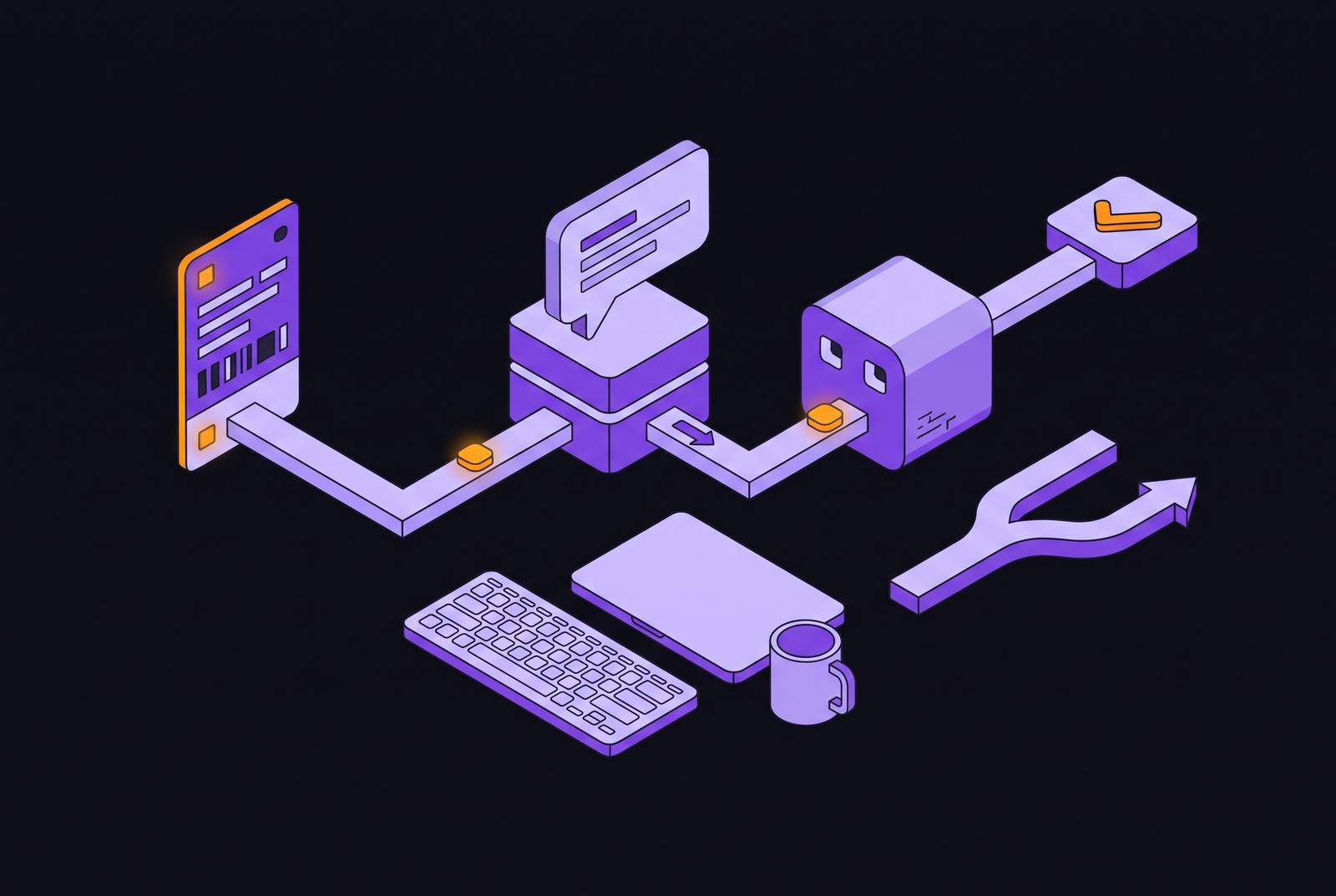
Linear’s cloud coding agent is a multi-harness cloud coding agent platform that turns issues into draft pull requests with Claude Code or Codex, without the need to set up a local development environment. Engineers can delegate an issue or mention the agent from Slack, with execution returning to the team’s shared workflow. Receiving a pull request without further keyboard input is reproducible when issue quality, environment configuration, harness selection, branch controls, and review feedback work together.
Why the issue tracker is now the starting point for code, not just a record of intent
The handoff point in software development has moved upstream. Previously, an engineer translated a ticket into implementation instructions, gathered context, monitored execution, and brought the result back for review. The issue described intent, while much of the implementation detail emerged elsewhere. An agent can now read that issue and its surrounding discussion, investigate the codebase, and produce a candidate change. The translation step is no longer a separate human task.
Acceptance criteria shape the first implementation pass, while affected areas, constraints, test expectations, and branch choices bound the work. Missing detail is therefore not merely a project-management inconvenience. It leaves the execution brief incomplete at the point work begins.
What happens inside a coding session from delegation to pull request
Linear’s coding agent documentation describes delegation as the creation of a secure coding session tied to an issue. A workspace member assigns the issue to the agent or mentions it in a comment. The agent starts from context already connected to the work, including the original request, customer signal, product decisions, related work, and discussion. It then reads the codebase using Code Intelligence before proposing an approach. For bugs, external tools such as Sentry or Datadog can help it investigate the problem.
Implementation follows that investigation within the cloud session. The agent writes code, runs tests, and opens a draft pull request, posting progress and a final summary to the issue’s activity. The draft sits beside the issue and the discussion that prompted the change, where the team can review or request changes. Existing GitHub permissions and review requirements determine what ships. Automated triage can start the same sequence without manual delegation by tagging the agent when an issue is triaged.
What makes an issue actually delegatable versus one that will produce a useless draft
Reliability begins with what the agent receives. Because it starts from the issue’s existing context, a vague request leaves it without a clear target even when the codebase is available. A delegatable issue distinguishes desired behavior from a possible implementation and identifies the files or product surfaces in scope. It also states what must remain unchanged and gives a testable definition of done. For bugs, reproduction steps and expected versus actual behavior make that target concrete.
A specification should require evidence alongside output. The definition of done should require automated coverage for the acceptance criteria, relevant test commands and their results, and changes limited to the requested behavior. It should also exclude deployment, secrets, and unrelated fixtures, while requiring the agent to flag ambiguity. People should have clear ownership of production configuration, credentials, data migrations, and broad refactors, with separate review gates for that work.
Not every request is ready for implementation. Requests to investigate, debug, research, plan, or create the task are treated as scoping, with a subsequent “proceed” starting the coding session. Engineering rules that stay in place should go in workspace-level or team-level markdown guidance so they do not need to be copied into every ticket. Issue templates then add the requirements for each task, so the team can delegate work in the same way without relying on an unusually careful author.
How the agent environment determines whether the session completes reliably
Even a clear issue needs an environment that works. Linear’s documentation says coding environments are the configuration for each repository that provides its runtimes, tools, configuration, and instructions. That setup can include runtime versions, environment variables, a prepare script, files at relative paths such as.npmrc, and repository-specific guidance. The prepare script reproduces the commands a developer runs on first clone. This is shared setup work reusable across tickets.
Secret handling requires a deliberate boundary of its own. Variables marked Secret can be used while the sandbox is being prepared but are unavailable while the coding agent runs. A variable needed by an agent-run command must be saved without that flag, exposing its value to the agent.
The environment also has a defined repository scope. Each environment contains one repository, and a repository can belong to only one active environment. Archived environments cannot start new sessions, while resource changes apply only to new sessions. A successful run becomes repeatable only when subsequent sessions receive the setup they need.
Choosing between Claude Code, Codex, and Cursor for a given task
Teams choose a harness after deciding on the issue and environment. Claude Code works well for long-context engineering tasks and workflows that make heavy use of MCP, and its instruction hierarchy runs from managed settings to directory-specific files. Codex suits cloud-isolated refactors and review automation, including triage-driven delegation and progress updates returned to the issue. These strengths suit different workflows.
Cursor adds its own intake and routing behavior. It analyzes issues and filters out non-development work before launching a cloud agent. Repository routing follows a defined precedence, starting with a [repo=owner/repo] setting in the issue, then a “repo” label group, a project label, and finally the dashboard default. That makes routing configuration a concrete comparison criterion.
Linear’s settings provide a workspace default, with an environment able to specify a different agent and model for its repository. Teams can therefore encode the usual choice by repository type while retaining the ability to change it. Hardwiring one harness into the environment makes future routing harder as models improve. The durable investment is a workflow that supports changes of agent.
Branch controls, review requirements, and the governance layer that stops autonomous agents from bypassing your process
Delegation does not transfer ownership of the work. When a human teammate delegates an issue, that person remains the assignee, while the agent produces a draft for review. GitHub permissions and review requirements still govern release. Base and working branch choices are equally consequential because a change made against the wrong base can require expensive reconciliation. Autonomous execution therefore needs clear branch controls as well as a clear description of the desired code.
The practical boundary is an inspectable draft with review evidence. Teams should require the diff, commit messages, commands run and their results, and a summary of attempted work and unresolved ambiguity. Keeping agent-generated pull requests as drafts preserves the distinction between work available for inspection and work ready to merge. Auto-delegation rules should leave out privileged changes that need a separate human owner. These controls make the workflow sustainable, but they also expose its limiting resource, which is the team’s capacity to review candidate changes.
How teams get feedback on a running session and steer it without starting over
Linear’s documentation describes shared sessions that teammates with repository access can follow, supplement with context, redirect, or take over. Progress appears in the issue’s activity in real time, and the team can enter the session to follow up without interrupting its current step. A comment with more context lets the agent adjust its approach. Posting “stop” ends the session immediately when the work should not continue.
Human input and completion are different notification events. When the agent needs input, it notifies the team. Teams enabling automated triage should understand that distinction because unattended intake still needs a route for unresolved questions. For tasks running for hours, checkpointing and persistent output after reconnection are relevant infrastructure capabilities, allowing work to withstand client disconnections and network interruptions. Automatic intake can create drafts faster than reviewers can check them unless notifications and review routing fit the amount of work the team can handle.
Why faster code generation shifts the bottleneck to review, and what to do about it
The strongest objection to background agents is economic. A fleet can create many pull requests in an afternoon, yet a senior engineer may need a lot of time to check each one. If that review consumes the capacity the workflow was meant to release, faster implementation can produce a negative return. At its June 2026 launch, Linear said it had merged a large number of agent pull requests internally in the month before. That volume makes review capacity central to interpreting the result.
The response is to design review for throughput. Small, independently verifiable tasks give reviewers a bounded decision, while required checks run before human review begins. Draft conventions separate inspectable work from mergeable work, and triage rules can target task types that are quick to validate. Linear’s Diffs feature adds structural diffing and AI-guided review to explain what changed and show where to look. People still need to judge whether the change solves the right problem when using these tools and rules.
Passing commands do not settle whether the tests cover the requested behavior or whether the implementation introduces maintenance or security debt. The production examples reinforce that distinction through Ramp’s emphasis on codebase quality and Coinbase’s focus on measuring time-to-production beyond counting lines of code. Review throughput is an engineering design problem. The same discipline that bounds a good issue gives its pull request a clear basis for evaluation.
What the loop looks like in production at teams that have run it at scale
Stripe’s Minions system merges more than a thousand pull requests a week with no human-written code. That demonstrates substantial production use, but it is not evidence that human review becomes unnecessary. Linear’s announcement describes Ramp and Coinbase as teams that had to build and maintain their own harnesses. The announcement positions the cloud coding agent as making that capability available without the same custom infrastructure investment. The relevant distinction is between access to execution and readiness to absorb its output.
Ramp built Inspect on Linear’s API to link specs, customer feedback, and code. A company leader’s warning about codebase quality places a condition on the apparent simplicity of the handoff. Coinbase’s focus on time-to-production likewise judges success by the work delivered, beyond the output generated. These are signs of mature evaluation rather than qualifications to ignore after deployment. The shared foundation is existing context, including issues, discussions, and codebase history, which carries the team’s accumulated decisions into the agent’s work.
How to run the loop as a team capability rather than an individual habit
Repeatability depends on where the workflow is maintained. Issue templates, environment configuration, agent guidance, branch policies, review conventions, and triage rules are team artifacts. Delegating from Slack, Linear, GitHub, or GitLab starts work where the team already works together, without a separate routine for writing prompts. Shared sessions also leave the work legible to people other than the person who initiated it. That is the organizational difference between an individual shortcut and a supported development process.
Per-run analytics attributed by source, harness, model, and credential can distinguish task types that resolve cleanly from those that require rework. For teams starting out, the practical approach is to choose one class of well-scoped work, such as lint fixes, test coverage gaps, or review comment responses. An issue template, configured environment, and triage rule establish the path, which is ready to expand when measured review time permits. Remaining harness-agnostic lets the team change agents without discarding the context and review conventions that make delegation dependable.