Agent Notification Design for Slack-First Teams
How Slack becomes the approval surface for background coding agents.
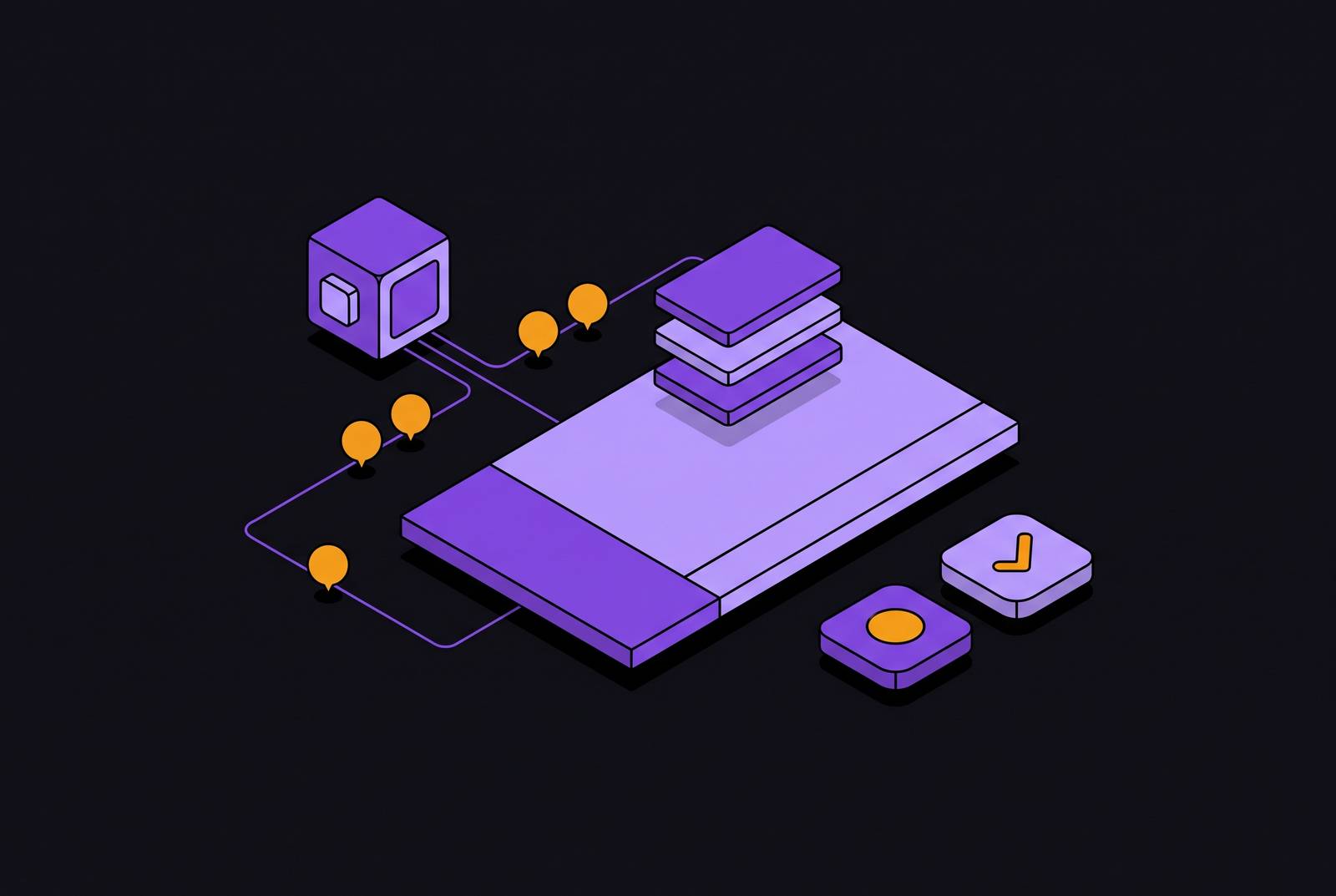
Agent notification design for Slack-first teams is the engineering layer that makes delegated coding work reviewable, attributable, and safe to approve. Replicas offers a managed cloud option for running Claude Code or Codex in isolated VMs configured with a team’s codebase and tooling. The workflow holds together when Slack delivers a trustworthy handoff that tells the right engineer what happened and what to decide.
Why Slack has become the handoff surface for background coding agents
An engineer delegates a task, the agent runs in a VM somewhere, and eventually a signal arrives. That signal may contain enough context to review the work, or it may require the engineer to reconstruct the run before making any decision. Once the work moves out of view, this difference decides whether people review it right away or put it off.
Reactive code assistants respond to activity in an editor, while background agents plan, execute, validate, and return a pull request as the engineer does something else. The three-layer 2026 stack therefore assigns different roles to the IDE, CLI, and cloud agent. The first supports real-time work, the second supports local execution, and the third supports asynchronous delegation. Cloud output belongs where the team works together, which may be somewhere other than where someone last edited code.
For Slack-first teams, that means requirements, error logs, deploy coordination, and agent handoffs share a communication surface. Anthropic’s 2026 Agentic Coding Trends Report describes the engineer’s role as orchestrating agents, evaluating output, and providing strategic direction. That shift makes the place where evaluation happens architecturally important. Replicas illustrates the change by accepting work from Slack, Linear, and GitHub and returning pull requests and recordings to those channels.
What Slack Code reveals about the design assumptions baked into agent workflows
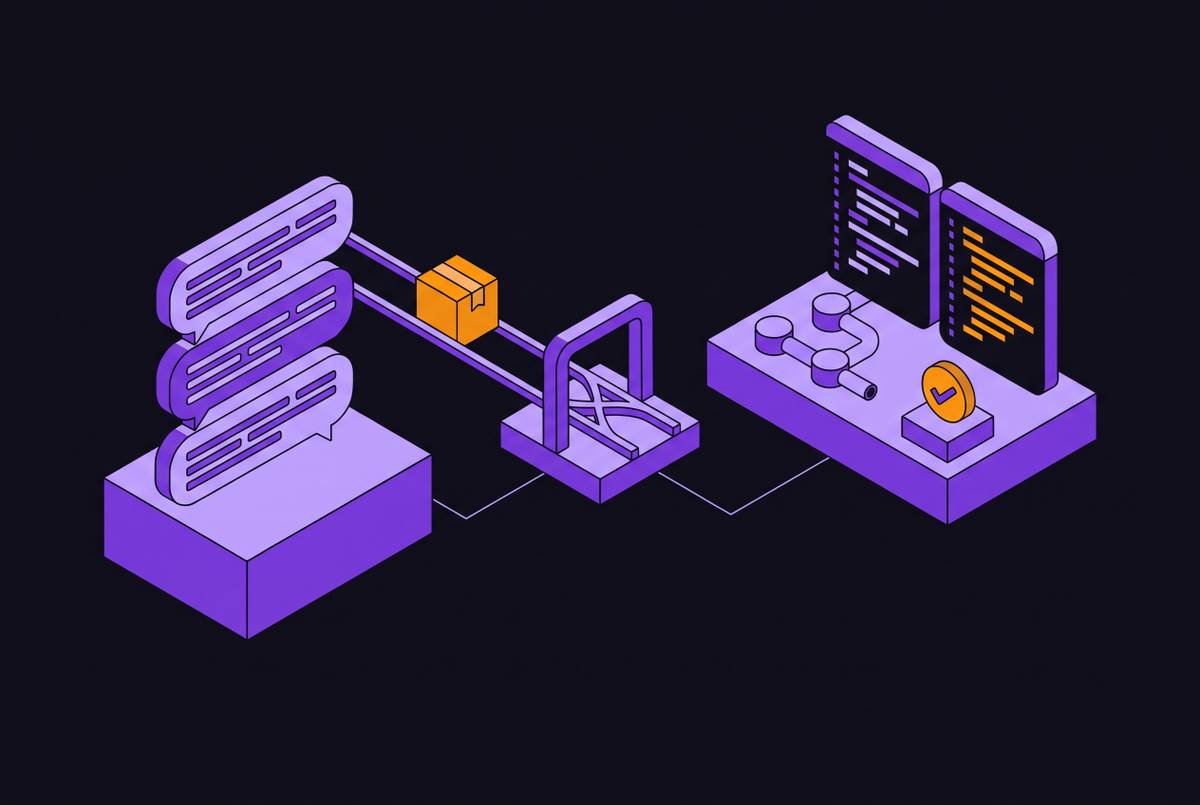
Slack Code, launched 20 August 2026, makes human oversight part of the workflow’s structure. The agent cannot push to production autonomously. Instead, it packages high-stakes work for an expert to approve inside the channel. The approval gate sits where the work is discussed, rather than depending on a separate review procedure that someone must remember to initiate.
Its other choices address the conditions under which that approval can happen. A dedicated channel keeps the context for each task in one place, while plan-before-code gives people a chance to change course before the agent writes code. Slack Code’s finding that the majority of code channels open and close within a day establishes a compact review window. Notifications must help people decide within that window instead of assuming they have several days to review the work.
These interactions rest on more than ad hoc webhooks. Slackbot MCP Client followed on June 18, 2026, allowing Slackbot to discover and invoke outside tools through connected MCP servers. Together, these choices show that conversational handoffs depend on durable access and integration boundaries. They also expose the three problems notification architecture must solve, namely noise, actionability, and attribution.
How different agents produce different notification shapes — and why one design doesn't fit all
Claude Code’s terminal-first execution, deep repository reasoning, 33 hook events, and Dynamic Workflows let it send notifications at points in a run when they can help. For architecture, debugging, and long-horizon refactors, a completion message alone comes too late to support redirection. Plan summaries, intermediate checkpoints, and diff previews give reviewers opportunities to intervene.
Review works differently with Cursor because its in-editor experience can stay open beside Slack while engineers build features quickly. Its Cloud Agents run in isolated VMs with parallel sub-agents, while Cursor Blame (Enterprise) distinguishes tab completions, agent runs, and human edits. A handoff can consequently be more confirmatory, but provenance still matters. Codex use for scheduled or multi-day automations creates another timing requirement, because the reviewer may return after a longer separation from the original task.
Opencode offers more ways to set up an agent through AGENTS.md project instructions and separate SKILL.md agent skills. JetBrains’ Developer Ecosystem Survey 2026 reports a small share of primary adoption but substantial mindshare, making it a realistic participant in a multi-agent stack. Because Replicas supports Claude Code, Codex, Cursor, and Opencode in isolated VMs, its platform-level notification problem spans these execution patterns. A common message format needs to preserve agent-specific hooks, checkpoints, and model context without forcing every agent to report at the same cadence.
The noise problem: why undifferentiated agent notifications collapse into alert fatigue
Concurrent agents can turn shared channels into streams of indistinguishable updates. JetBrains’ Developer Ecosystem Survey 2026 reports that 90% of professional developers use agents at least once a week. At that level of adoption, notification volume is a team problem even when each individual delegates relatively few tasks. When progress messages and review requests look alike, engineers have to read everything to find what matters.
METR’s controlled study found that experienced open-source developers were slower with AI tools despite predicting they would be faster. Time saved on writing code was consumed by reviewing, debugging, and course-correcting output. This finding makes the review burden concrete. A handoff that makes the reviewer piece the run back together adds work where the time saved is already at risk.
Slack Code’s dedicated task channels isolate context, although they raise a reasonable concern about channel sprawl. Its finding that most code channels close within a day makes that sprawl time-bounded. Within the task, threading can group checkpoints beneath a parent message, while agent identity, task source, status, and diff size support triage. The objective is notifications that let engineers act without reading everything.
What actionable agent notifications actually contain
A handoff starts with where the task came from, including the Linear issue ID, GitHub issue number, or Slack message link that started the run. That connection gives the reviewer access to the requirement against which the result must be judged. Harness and model identity establish what produced the work. A plan summary then explains the intended approach and makes any departure from it explicit.
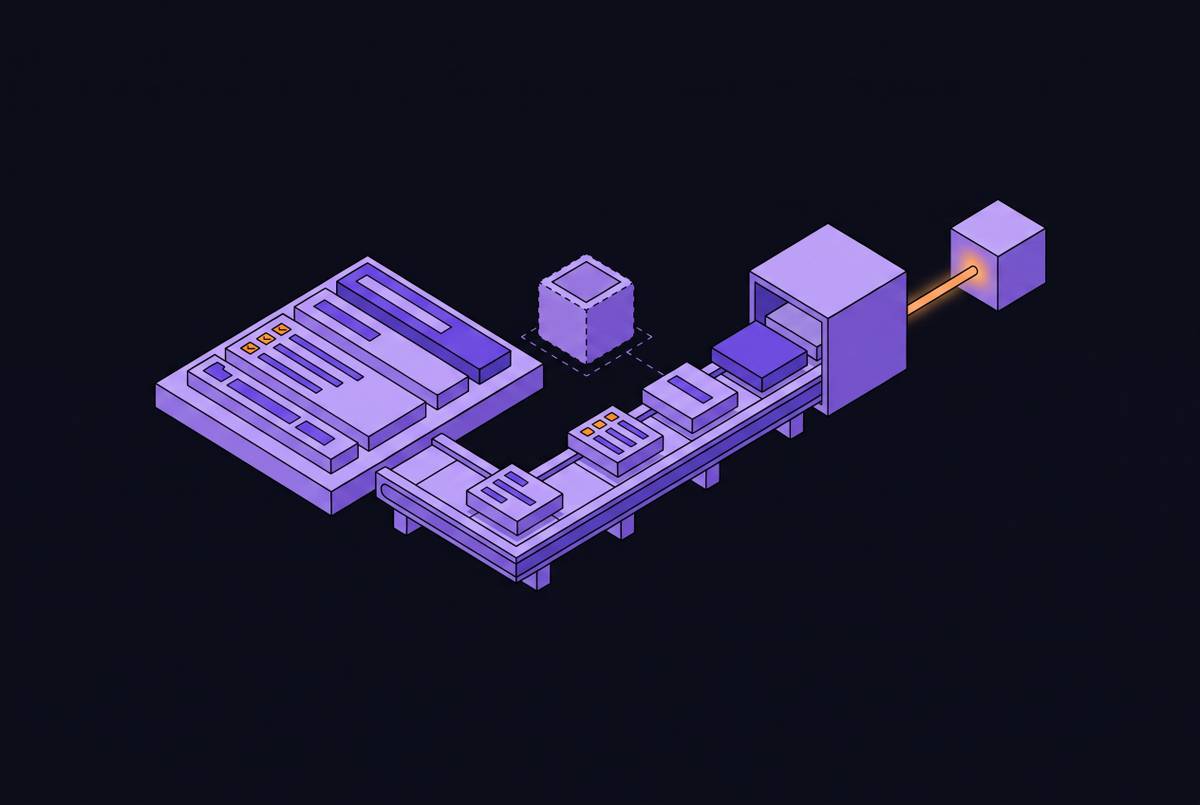
The diff summary describes how many files changed, which files they were, and the size of the change. A two-line fix and a 40-file refactor take different amounts of work to review, even when both report success. Provenance metadata adds the distinction between agent-generated work and human edits. Validation results should state whether tests, builds, and the agent’s checks passed, rather than leave the reviewer to infer success from CI logs.
The final element is the required action, whether approval, redirection with a comment, or escalation. In Slack Code, a designated reviewer approves high-stakes work inside the channel. The Upsun/GitLab review agent provides another concrete example of structured handoffs by classifying GitLab and Linear webhook requests, running Claude agents with sandboxed tool access, and returning results to GitLab comments and Linear agent sessions. A drill-down link should lead to the raw logs, intermediate tool calls, and setup output. The primary message should do the work of a good PR description by explaining what changed, why, and what needs deciding.
Why sandbox configuration determines notification reliability before design does
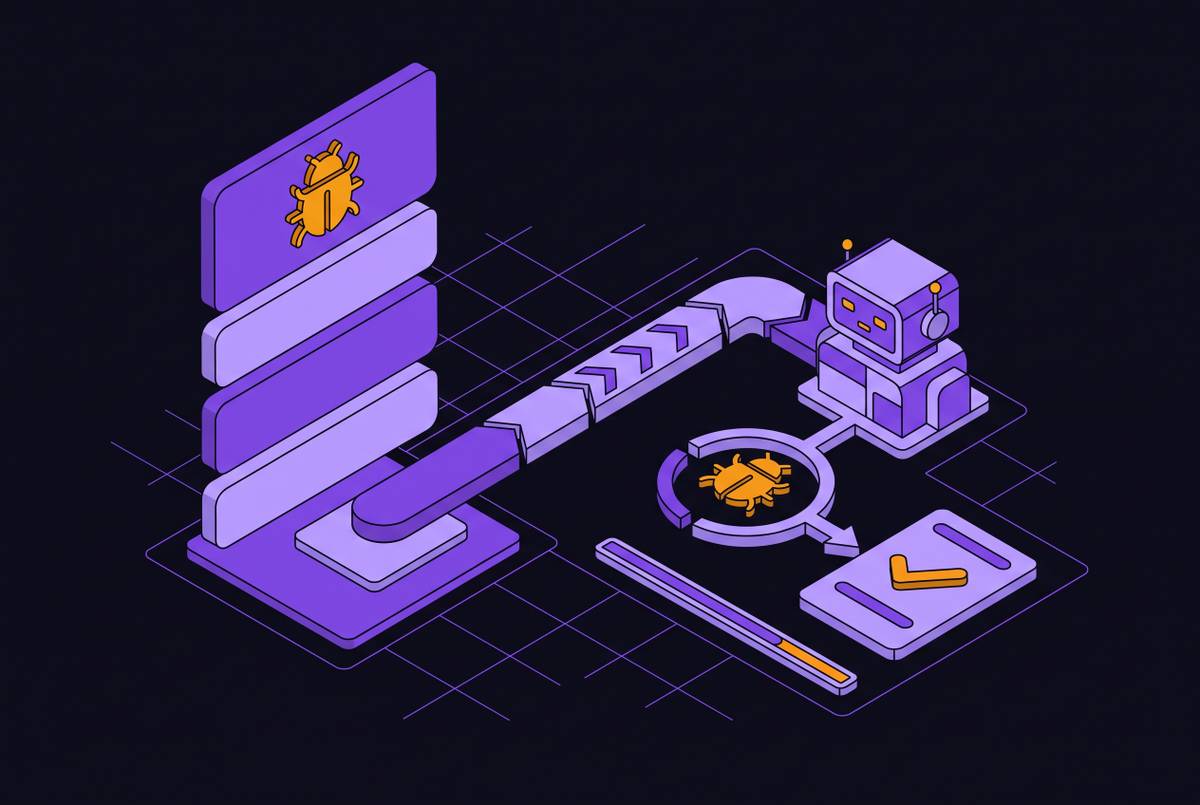
Infrastructure comes before notification templates. Agents in shared or misconfigured environments can corrupt state while installing packages, running build scripts, starting servers, or making network requests. A failure in one task can then produce failure signals in another. Reviewers who repeatedly encounter these false alarms learn to discount notifications, including genuine failures.
An isolated VM per task contains that interference and makes failures attributable to a single run. Sub-second provisioning supports prompt execution, while programmatically triggered tests, checks, and type verification give the handoff a direct validation result. Clean destruction of ephemeral environments prevents a failed task from contaminating the next one.
The managed environment offered by Replicas puts each task in an isolated, fully configured Linux VM with the team’s dependencies and tooling. Agents can install packages, run services, drive a browser, and check their work before sending back the handoff. The Upsun/GitLab review agent uses a different boundary, running shell commands inside a Bubblewrap sandbox with a network allowlist restricted to package registries and the GitLab instance. These constraints make the execution conditions explicit and reduce unrelated causes of noise. Once a signal can be tied to a reliable execution boundary, the next requirement is identifying exactly which run produced it.
Attribution at the notification level: knowing which agent did what, and why it matters at team scale
A notification without provenance separates the review decision from the evidence needed to assess it later. Harness identity distinguishes Claude Code, Codex, Cursor, and Opencode output. Model version makes changes in quality measurable across upgrades, while task source connects the result to its workflow integration. Credential or seat identifies who paid, and run duration and environment help explain execution cost.
Repository-level attribution solves only part of this problem. Cursor Blame (Enterprise) distinguishes tab completions, agent runs, and human edits, but that information also needs to reach the handoff where review decisions are routed. Metadata-driven cycle-time tracking cannot substitute for line-level provenance. Knowing when a pull request moved does not establish which changes came from an agent.
For Replicas, per-minute analytics attribute work to a source, a person, a harness, a model, the paying credential, and the skills and MCP servers used. This makes attribution available where the notification is generated. Engineering leaders can use linked run, PR, and production-outcome data to assess time to first review, defect rate, and incidents traced to recent changes. Notification fields provide the connecting record for those outcomes. That same record must also support the immediate decision about who should review or receive an escalation.
Routing agent output to the right reviewer at the right moment
Sending every result to the person who triggered the agent preserves a bottleneck. Routing needs to reflect risk, ownership, and urgency. Slack Code’s designated-reviewer model makes clear who is responsible for reviewing high-stakes actions. The reviewer is deliberately assigned.
Risk depends on more than a success label. Diff size, file scope, and affected services help distinguish a two-line bug fix from a 40-file refactor. Ownership then identifies the relevant judgment, such as dependency policy for an upgrade or test-suite ownership for a failing-test fix. A feature PR may also need product-owner verification of requirements as well as engineering review.
A production incident fix needs a different cadence from a scheduled dependency audit, and trigger metadata can supply that distinction.
Teams also need to plan for escalation beyond choosing where to send the notification. When a run fails, times out, or reaches an unresolved decision, the recipient needs enough context to resume it. Agent memory and context persistence across interrupted runs are therefore prerequisites for recoverable escalation. Without them, a well-routed notification may still deliver only an unusable failure alert.
How teams should build the notification layer into their agent rollout, not bolt it on afterward
Teams should design notifications as they plan deployment because the first handoffs shape what people expect. JetBrains’ Developer Ecosystem Survey 2026 identifies social visibility, rather than mandates, as a driver of adoption. If the first visible outputs are noisy or difficult to act on, ignoring them can become the team’s default response. Retrofitting a cleaner message later means changing an established habit as well as changing software.
The considered order starts with isolated environments for each agent task. Next comes agreement on attribution fields, including harness, model, task source, and credential, before completed runs accumulate without them. The content structure follows, separating plan, diff, validation, and required action from drill-down material. Routing rules then set who reviews the work based on task type and risk, and when escalation fires. Review metrics should be instrumented from the start, including time to first review, approval rate, escalation rate, and defects traced to agent output.
This sequence should produce a normalized schema that works across harnesses. Replicas combines relevant foundations through isolated VMs, triggers from existing work channels, structured outputs, and per-run attribution. Those foundations support notification design but do not replace the team’s decisions about review and approval. Teams should pursue both a quieter Slack workspace and a trusted handoff that lets cloud agents absorb implementation work and turns agent adoption from an individual habit into a team-wide operating model.