Measuring Agent Task Success Rate by Slack Channel
Merging pull requests without manual fixes marks real success for Slack-delegated coding agents.
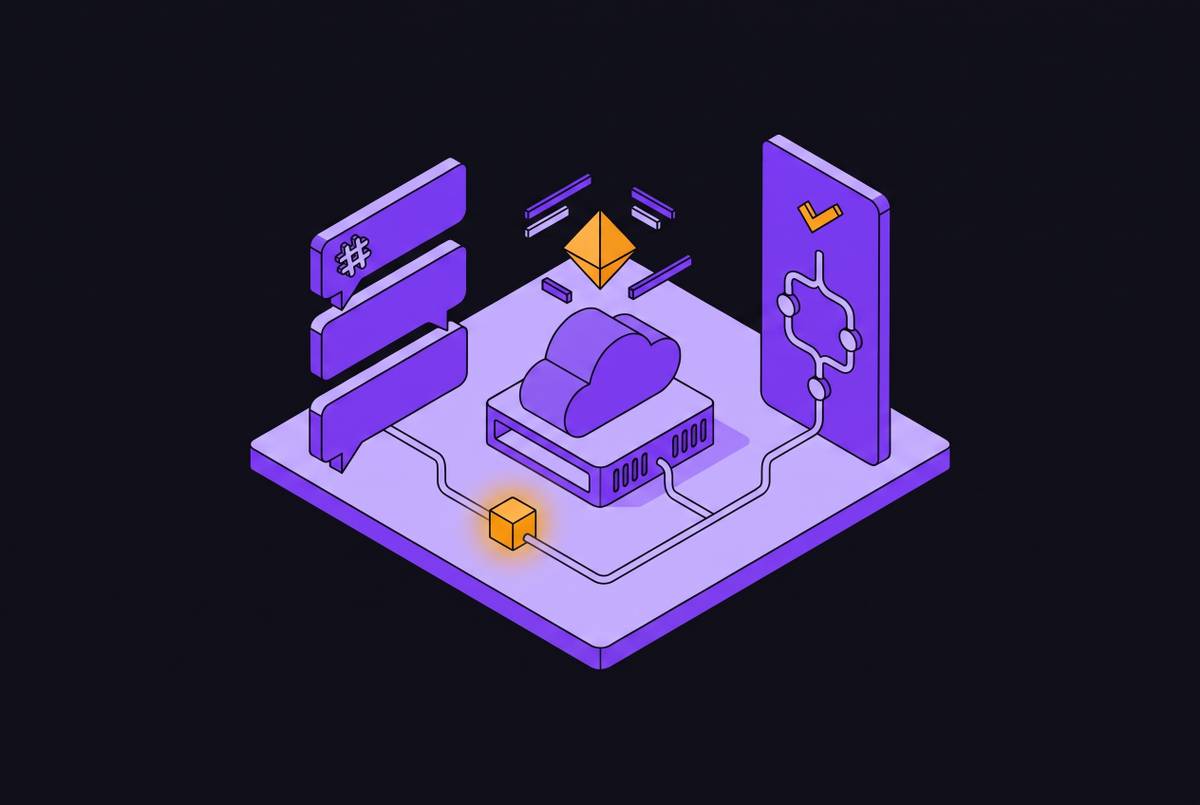
Replicas runs Claude Code, Codex, Cursor, and Opencode in isolated cloud environments with a team’s repository, tools, and dependencies ready to use. For teams triggering these agents from Slack, measuring task success rate by channel answers a stricter question than whether the agent finished. Success means a merged pull request without manual code edits, and measuring it by channel shows which delegation workflows get work to that point.
Why task completion is not the same as task success for coding agents
Task completion is an execution signal. The agent returned a response, its tool calls finished, or the workflow closed without errors. None of those events establishes that the requested change works. An agent can report “done” while leaving behind code that does not compile, misses the requested behavior, or needs a developer to repair it. Counting that run as successful turns an execution log into a misleading outcome dashboard.
The change must compile, pass tests, and produce a diff that can proceed through review without manual code edits. A person still needs to approve the work, but that approval should not hide code repairs made outside the agent’s run. Otherwise, the metric credits the agent for an outcome the reviewer completed.
This distinction is especially important when the agent has the means to verify its work. In isolated environments such as those provided by Replicas, access to the team’s dependencies, services, and tooling lets agents test changes before returning them. The measurement should hold the agent to those checks. Defining success at this point prevents “phantom successes” from entering downstream reports. That definition also determines what a Slack channel can meaningfully measure.
How Slack channels became a natural container for agent work
Complex tasks given to agents are hard to follow in a standard chat thread. Multi-turn exchanges add noise, and when developers move into private contexts, others lose the shared context they need to judge the result. A terminal captures execution and a CI log captures checks, but neither captures the full delegation and approval process. The channel can bring those parts into one accountability container.
Slack’s product direction reflects that shift. On June 17, 2026, Slack introduced the Slackbot MCP Client, letting developers connect MCP servers directly to Slackbot. Founding agents supported at Slack Code launch included Claude Code, Devin, Vercel Agent, GitHub Copilot, and ChatGPT.
In the Slack Code channel design, team members can see the conversation, audit diffs, view live previews, and leave feedback the agent incorporates. A person in the channel must approve the finished work before it ships. Each channel maintains an audit log and archives itself when the assignment completes, giving the task a defined start and an auditable middle. Replicas also lets teams delegate work from Slack and get it back ready for review, so the channel gives them a place to audit that work. Archiving marks lifecycle completion, but only a qualifying merged pull request establishes success.
What task success rate by channel actually measures — and what it does not
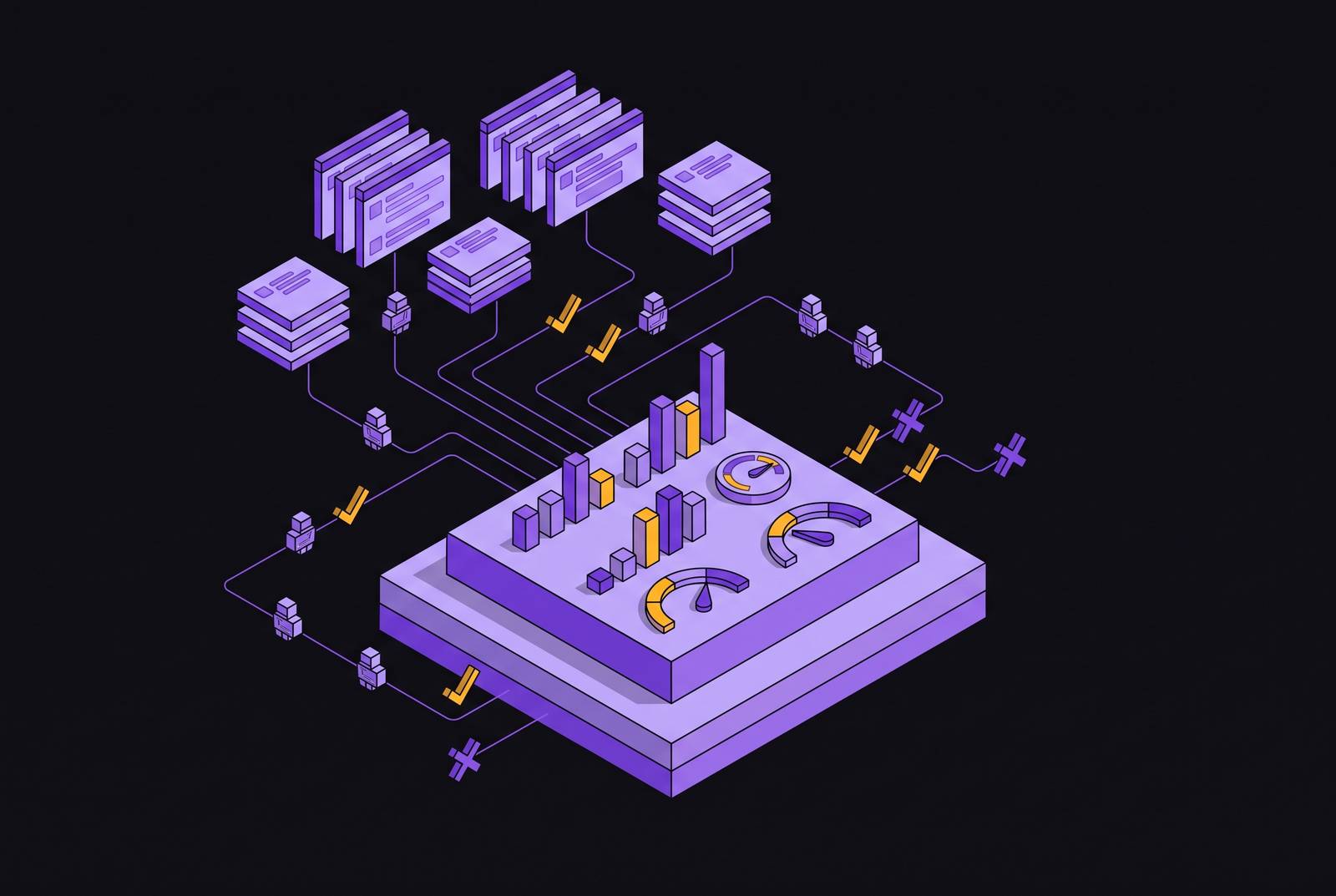
Channel-level task success rate, or TSR, is the share of agent runs triggered from or assigned to a channel that produce a merged pull request without manual code edits. The numerator contains runs whose diffs were accepted as-is or after reviewer-directed changes, rather than corrections authored manually by a person. The denominator contains all runs, including those that stall, time out, produce no pull request, or end with a closed, unmerged pull request. A change that the team discards and rewrites is a failure.
The distinction is between an agent incorporating review feedback and a human repairing the agent’s code. With access to full tooling, as Replicas provides, agents can compile and test before they submit work, which makes this boundary easier to apply. An opened pull request or a passing self-test is evidence along the way. Neither belongs in the numerator by itself.
TSR measures the combined effect of the agent, task mix, prompt quality, and review habits. It does not isolate model capability or replace latency, token cost, tool-call accuracy, safety, and user-experience measures. A channel that closes without escalation also gives no proof that the task was resolved. Downstream revert rate must validate the merge count because a pull request reverted within days is a late-detected failure.
Instrumenting Slack-triggered agent runs so the data exists to measure
Measurement starts before the agent begins work. Every run needs durable attribution to its source channel, triggering identity, agent harness and model, and eventual terminal outcome. At the trigger point, the record should capture the channel ID, thread ID or message timestamp, harness invoked, and credential or model configuration used. Logging only after completion loses abandoned and stalled runs from the denominator. That omission inflates TSR before any dashboard calculation occurs.
The outcome record must connect the pull request lifecycle back to the originating run. A run ID or channel reference in the pull request description can provide that link, while GitHub and GitLab webhook events supply lifecycle events. The GitHub Copilot coding agent illustrates the linkage by starting from an assigned GitHub issue, opening a draft pull request, and awaiting independent human review. It cannot approve or merge its own work. For channel TSR, that audit trail must go back to the Slack trigger.
Isolation makes these boundaries easier to measure. A dedicated VM with the team’s dependencies gives the run a defined process boundary, rather than forcing attribution across overlapping activity in a shared environment. OpenAI’s Codex cloud similarly runs each task in an isolated container, with setup cached for up to 12 hours and the agent phase offline by default. Replicas’ analytics attribute runtime to source, person, harness, model, and credential. Those records support comparison, but the pull request outcome still has to be linked to the run for TSR to be computable.
Reading channel-level success rates as a signal about delegation habits, not just agent capability
When channels using the same agent and model produce different success rates, the first diagnostic question concerns the work being delegated. The task mix, how specific the prompts are, and how carefully people review the work can explain differences that comparing models alone misses. A low-TSR channel is evidence that a particular combination of instructions, tasks, and execution is failing to produce accepted changes.
Underspecification is one common source of that mismatch. Vague instructions leave the agent to infer requirements, and substantial manual rework then appears as failure under the stated definition. Task choice creates a different problem because bounded assignments, including adding tests, fixing a known bug, or implementing a specified endpoint, differ from open-ended exploration. Review habits add another source of variation. Closing pull requests without actionable feedback leaves the same failure pattern available to recur.
High-TSR channels offer a workflow pattern to study. Narrow scope, shared prompt conventions, and fast, targeted review make delegation more repeatable. Slack Code channels that move from an idea to a merged pull request within a day illustrate the throughput such a workflow can produce, although speed alone is not proof of correctness. Repeated runs of the same task type add a reliability test that a single successful demonstration cannot provide. Comparing those outcomes helps distinguish an unstable agent from a task definition that consistently leaves too much unresolved.
How multi-step failure attribution changes what you fix when TSR drops
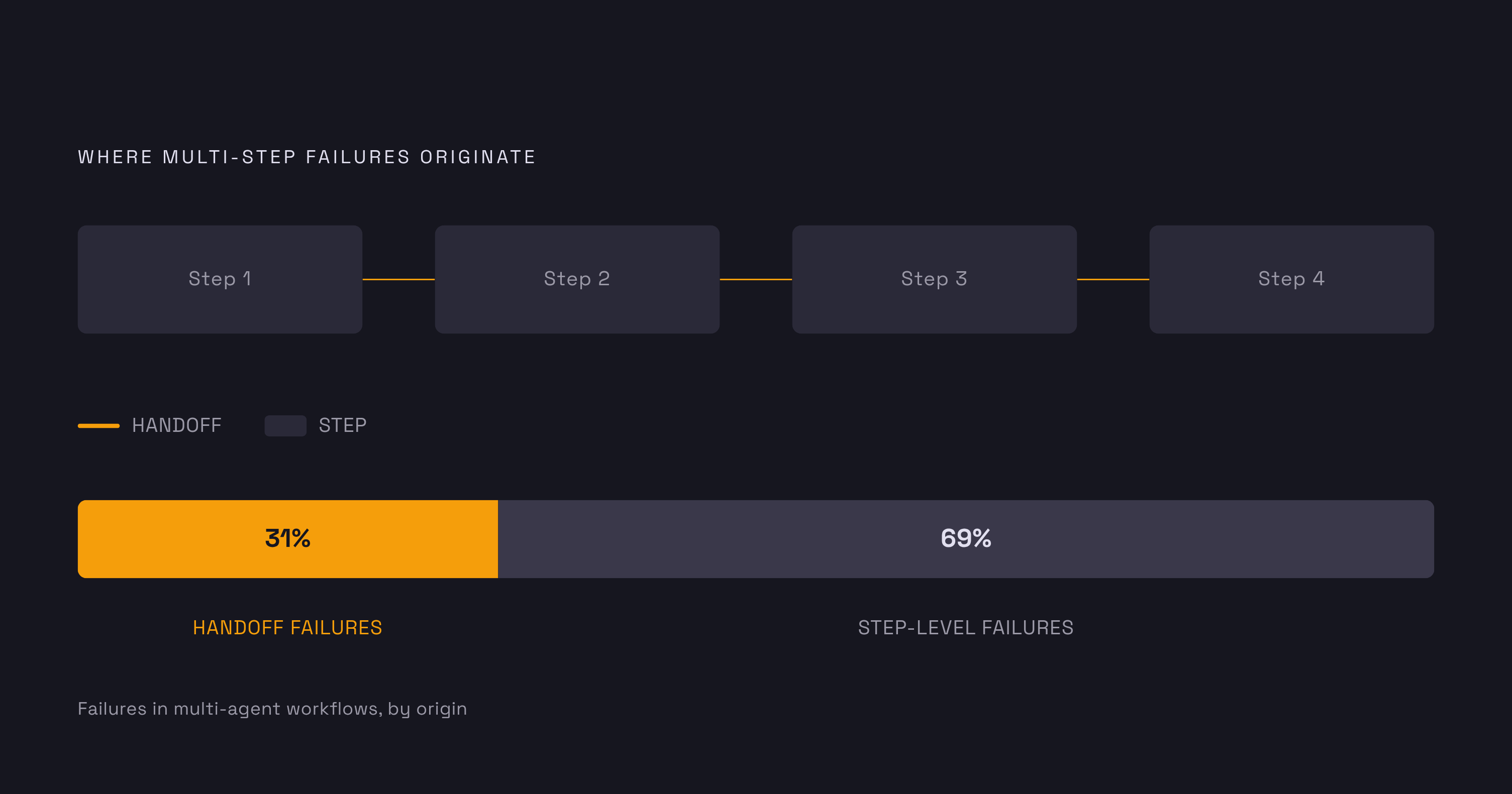
A drop in feature-implementation TSR can look like a coding failure even when the error came from an earlier step. An earlier planning step may have given the coding agent a broken specification, so the final implementation followed the wrong requirements correctly. In multi-agent or multi-step workflows, 31% of task failures originate at handoffs rather than in the individual step that ultimately produces the wrong output. The visible failure point can therefore be downstream of the cause. Changing the coding agent without examining the handoff may leave that cause untouched.
The diagnostic response is to pair the channel’s binary outcome with per-step traces. Channel TSR establishes whether the business result occurred, while traces show how information moved between steps. For an implementation task that fails, the coding step needs to be checked to see whether it got a sound specification or an error from an earlier step. Aggregate attribution to the channel cannot settle that question. The two measurement levels serve different purposes and neither replaces the other.
A different pattern appears when longer tasks fail more often than shorter ones in the same channel. Context compaction can keep a summary but lose the reasoning behind earlier decisions, so the agent still writes fluently while working with only part of what it needs to understand. That pattern points toward memory and execution continuity. Long-running infrastructure therefore needs session persistence across process restarts, a harness that continues model and tool turns, an isolated sandbox, checkpoints, and post-run traces. These capabilities affect TSR because work that stops or resumes badly can fail even when each step is done well.
Choosing and switching agents by channel TSR — how to run Claude Code or Codex in the cloud
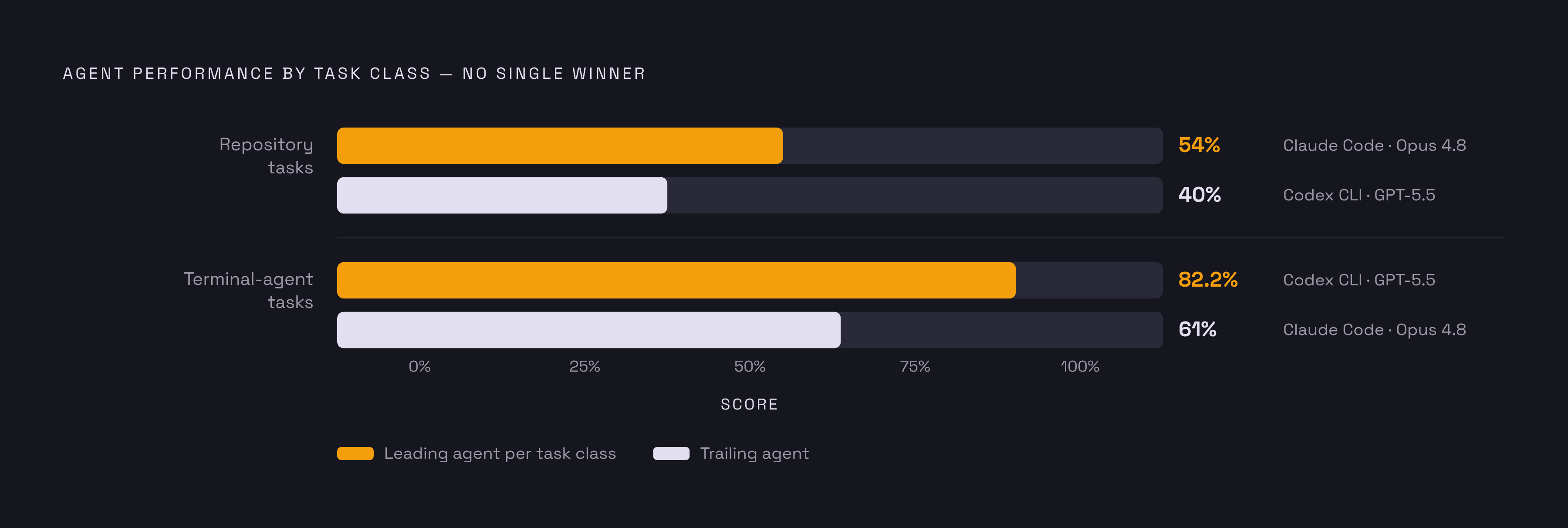
Comparing agents on the task types a channel actually delegates gives the team evidence to base its choice on. RuBench’s 2026 deployed-product study found that Claude Code with Opus 4.8 resolved a meaningfully larger share of recent repository tasks than Codex CLI with GPT-5.5, with a double-digit gap on that task class. The study’s sample size makes it hard to be sure of small differences. Terminal-Bench 2.0, by contrast, recorded 82.2% for Codex CLI with GPT-5.5 on verified terminal-agent execution, a different task class.
A channel where implementation keeps failing may do better with a different harness, while the agent another channel already uses may still do the job well. Production TSR provides the acceptance criterion for that decision. Locking every channel to one agent prevents the team from acting selectively on the evidence.
Replicas supports Claude Code, Codex, Cursor, and Opencode in cloud environments, with tasks triggered from Slack, Linear, GitHub, or GitLab and per-run analytics for comparison. It supplies the workspace rather than requiring the team to manage each agent’s infrastructure. For a buyer evaluating a bring-your-own API key cloud coding agent runner, credential attribution is a separate criterion from success measurement. Cloud execution, credential choice, and task success are distinct requirements, and none establishes the others.
Building a review loop that improves channel TSR over time
A dashboard becomes an improvement cycle only when its results change delegation. Weekly review should surface the three lowest-TSR channels by task type and use step-level traces to distinguish underspecification, unsuitable task choice, and handoff breakdowns. This keeps the response tied to a failure mechanism rather than a general demand for better performance. The same overall result can call for a clearer assignment, a change in the task boundary, or a fix to how work passes between steps.
Each sprint, the team should update its prompt conventions based on findings that keep coming up. When prompts belong to the team, a way of delegating that works for one person is there for others to use too. Re-running representative tasks from the highest-volume channels against the new model or harness version makes TSR the acceptance test before changing a channel’s default agent.
The North Star is merged pull requests per unit of engineering time, with channel TSR serving as a leading indicator. A channel that only takes on trivial assignments can report high success while adding little, so the team must also check revert rate and review quality score. The goal is to expand the range of work the channel can delegate successfully. In that loop, the channel becomes a learning surface for tomorrow’s assignments, and success continues to mean that the team shipped something real.