Turning a Linear Assignee Field Into a Pull Request Without Writing a Single Webhook
Native Linear monitoring lets an assignee change start an agent.
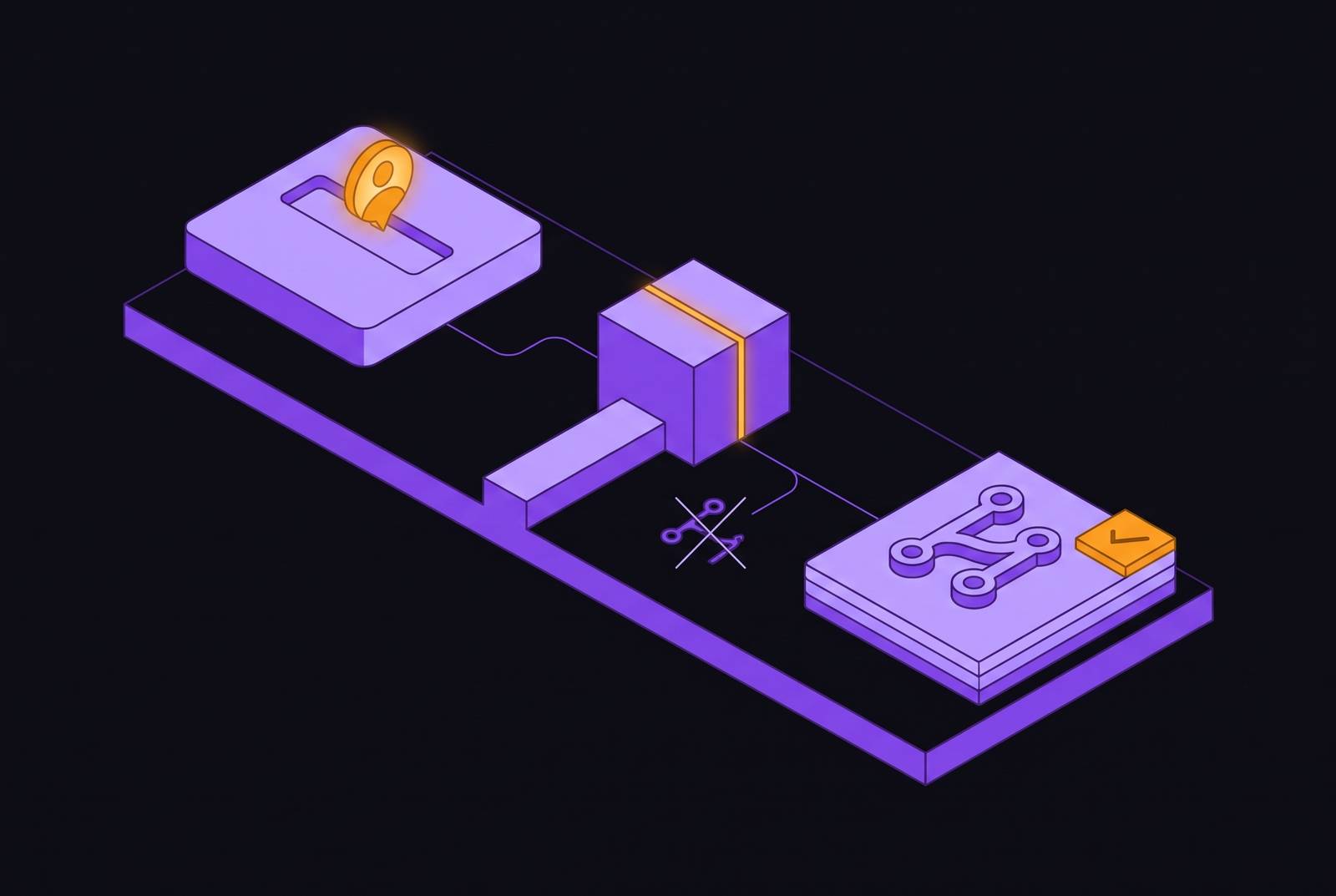
A Linear assignee change can start an autonomous coding agent and return a pull request without webhook code when the agent platform natively monitors Linear. Slack can provide the entry point, with a message becoming a Linear issue that hands work to the agent. The assignment and the pull request form the durable workflow.
Why engineering teams are reaching for the assignee field as a workflow primitive
Engineering teams already use Linear assignments to show who owns the work. An assignee change tells the team who should act next, but it does not necessarily start the work. That gap persists even when a team has adopted a coding agent. Someone still has to move the task into the agent’s working environment unless an integration handles the handoff.
The expected integration work can stall adoption. Engineers expect to need webhook plumbing, glue scripts, or another tool that the team must learn before the agent can help. Native monitoring lets the team skip that work because the platform responds to an event the team already creates.
What Linear's native coding-session integrations actually do today
Linear’s GitHub integration links issues to pull requests and commits, automates issue status based on PR activity, and supports pull request review through Diffs. Those connections give a coding task a path back to its originating issue. On Business and Enterprise plans, Code Intelligence adds codebase Q&A and can hand work to coding sessions on its own. The issue connects the request, the code, and the review.
Linear launched coding sessions on June 11, 2026. These sessions let Linear Agent write code with Claude Code or Codex and return a diff for review. GitHub Copilot’s cloud agent for Linear reached general availability on July 23, 2026.
The visible interaction is deliberately small for the team. An issue is assigned, a coding session starts, and proposed changes return for inspection. The assignee field, issue status, and GitHub link provide signals that the platform can act on. That platform-side capability is distinct from the choice of agent that performs the task.
How the four main cloud-capable agents connect to that trigger
Claude Code, OpenAI Codex, OpenCode, and Cursor offer meaningful cloud-execution capabilities, but they differ in execution surface, model freedom, and how much infrastructure a team owns. Those differences shape their fit for asynchronous issue work. Benchmark scores do not resolve that choice. A team that wants a self-hosted runtime needs different things from one that wants to review work in an editor.
Claude Code’s default model on paid plans is Claude Opus 5.5, with a large context window. It runs in the terminal, VS Code, JetBrains, a desktop app, the web, and mobile. Its Agent view shows background sessions on one screen, each in its own Git worktree, while /goal keeps it working until a separate model checks that the stated condition has been met. Dynamic Workflows orchestrate dozens to hundreds of parallel subagents for migrations and large refactors. It works best here on long, autonomous tasks that span multiple files and need reasoning across a large codebase. Model choice remains limited to Anthropic, which constrains alternatives if a model regression affects the workflow.
Codex combines an open-source Apache-2.0 CLI with Codex Cloud, which performs tasks in reusable cloud environments and returns changes for review. Its default model as of September 29, 2026 is GPT-6.1 Sol, with GPT-5.5 retiring from Codex on October 14, 2026. Worktree isolation, cloud runners, and the headless codex exec mode support parallel work on separate features. Teams can also start a review through @codex review. Its safe defaults and background parallel runs make it a strong choice, especially for teams already on ChatGPT plans.
OpenCode takes a provider-agnostic approach under a permissive open-source license. It supports 75+ model providers, dual build/plan agents, and a headless server mode for self-hosting, without supplying a model of its own. Teams connect a provider or local server. Version choice deserves attention because V1 included LSP integration, while V2 removed it and became the main release on October 12, 2026. OpenCode fits teams prioritizing model freedom or self-hosted deployment, whereas Cursor’s strongest case is an editor-based workflow with visual diffs and Cloud Agents. Cursor’s ownership change is also relevant to the longer-term dependency decision.
How can teams run agents in parallel from a Linear board without a webhook?
With a connected platform, assigning multiple Linear issues to a coding agent can start parallel sessions in isolated environments. The board serves as both dispatch queue and status tracker. The team does not need to operate a separate scheduling interface. Each assignment starts work that comes back as a pull request for the team to review.
Claude Code has parallel subagents, while OpenCode can run more than one agent on the same project at once. Codex combines worktree isolation and headless execution for separate features in sandboxed environments. Cursor’s Cloud Agents run in isolated VMs and can be triggered from Slack, GitHub, or mobile. A Linear comment that pings a connected agent can also start work without the team writing a webhook handler.
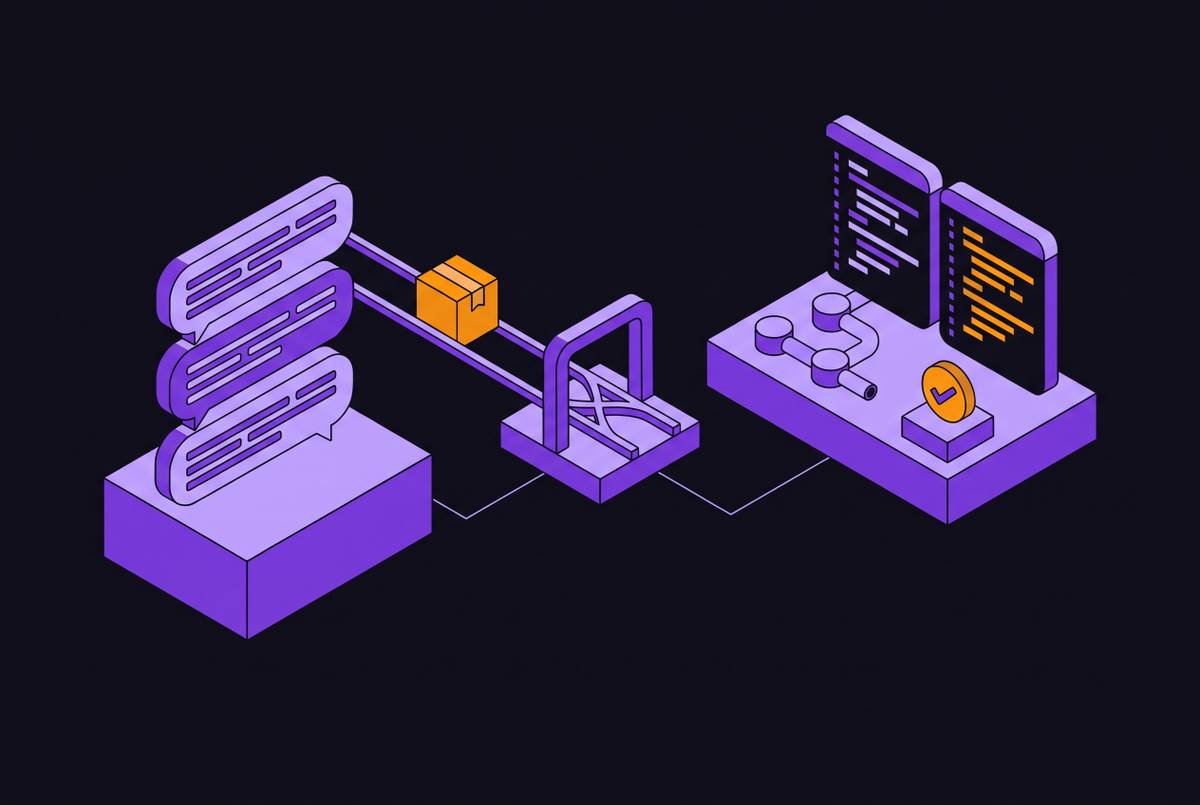
Coinbase’s Forge pattern makes the Slack-to-Linear handoff concrete. Someone flags a bug in a Slack channel, a workflow turns that message into a Linear issue, and Forge drafts a fix, opens a PR, and sends it back to Slack for review. Linear is the handoff point. Ramp provides another example of this pattern operating at scale through Inspect, which is built on Linear’s API and accounts for a majority of its merged PRs. These examples show why integration into existing task and review surfaces is more consequential than another place to prompt an agent.
What determines whether the pull request is actually useful
Removing integration code shifts the delivery constraint toward issue quality and the team’s capacity to validate and review changes. Sparse, one-line issues give agents little basis for deciding what a correct result looks like. Detailed acceptance criteria, relevant file paths, and related issues make the task clearer to the same agent.
Linear’s launch note acknowledged that agents “generate large volumes of code, but individuals are still accountable for the changes that merge”. Assignment delegates execution. That distinction becomes important when parallel sessions generate proposed changes faster than reviewers can evaluate them. A working trigger is only the beginning of a useful delivery process.
Coinbase found that more code put more pressure on the checks that followed. As code generation got faster, CI/CD had more work to do, so builds that had taken many minutes had to move to cached cloud environments and take less than a minute. PR review cycle time fell sharply, but getting that result took work on CI/CD as well as putting agents to use.
Linear’s triage agent resolves roughly a third of incoming bug reports on the first pass internally. That result suggests a stronger fit for well-scoped, reproducible problems than for open-ended architectural questions. For teams adopting the workflow, the practical lesson is to make the intended result testable before dispatch.
Security and governance controls the team needs before agents start merging into production repos
An assignee trigger should authorize only investigation and a proposal. Giving an agent GitHub access without scoped permissions and branch protection is the wrong default. The agent should not own the merge decision. Draft pull requests, required human review, and protected main let agents do the work while leaving people to approve the changes.
Each integration should use a distinct identity. Fine-grained PATs or GitHub App installations should be scoped to specific repositories with the narrowest permissions. The stated permission scope is contents read and pull requests read/write, with no admin or secrets write access. Credentials belong in the platform’s secret store. This separates the integration’s authority from the person assigning work.
Enterprise evaluation also extends beyond repository permissions. The platform running agent environments should have SOC 2 Type II certification, while SAML SSO and SCIM provisioning should bring agent identities under the same directory management as human identities. Audit logs need to capture what the agent read, the commands it ran, and what it proposed. The final PR is not a sufficient audit record. Clear training-data policies should offer exclusion of proprietary code from model training, and teams with data-residency requirements need private cloud or self-hosted deployment options.
How to set up the Linear-assignee-to-PR workflow without writing webhook code
For a team ready to adopt this workflow, setup begins by connecting Linear to the agent platform or using Linear’s native coding-session integration on Business or Enterprise. The platform watches for assignment changes through the event model Linear already has. No custom webhook endpoint is required from the team. This connection establishes the path from an issue event to an agent session.
The next step is to define the dispatch rule. The team configures which assignee change or agent-designated label starts a session, then assigns or labels the issue accordingly. The connected platform picks up the event and opens an isolated VM for the session. Event-driven and scheduled execution remove the need for someone to remain at a keyboard. An assignment can start work at any hour.
Before the first task runs, the lead should establish the agent’s separate identity and repository-scoped GitHub access. That means using the fine-grained PAT or GitHub App scope described above and placing credentials in the platform’s secret store. Draft PRs, required human review, and protected main must be in place before execution.
The first issue should describe acceptance criteria as testable conditions. Its body should name the relevant file paths or module names and link to related issues, designs, or error traces. Sentry links can feed directly into the triage loop.
Once that issue is assigned, the platform starts the session and returns proposed changes for review. The team then evaluates the pull request through its existing review process. That process remains unchanged. The automation replaces the handoff into coding work.
Keeping the option to switch agents without rebuilding the workflow
The assignee-to-PR pattern remains durable only when changing the agent does not require rebuilding the trigger. SpaceX’s acquisition of Cursor gives teams a concrete reason to evaluate that dependency now. It is not a criticism of Cursor’s capabilities.
All four agents speak MCP, and Codex and Claude Code both install as extensions inside Cursor. Mixing agents is already part of the available workflow. That interoperability supports an architecture in which teams can change harnesses and models without changing how they assign work. It does not require the task board to become an extension of one model vendor.
An agent-agnostic platform treats the environment as the product and the agent as replaceable. Running different agents in the same isolated VM infrastructure, behind the same Linear, GitHub, and Slack triggers, preserves the team’s handoff when the executor changes. The stable interface is the pull request. Its reviewer does not need to know which agent opened it or which model wrote the code, so the workflow can survive an agent swap without changing its output format.