Parallel Agent Queue Mechanics When Every Task Gets Its Own Fresh VM and Nobody Owns the Infrastructure
Isolation and queues replace persistent infrastructure for parallel agent work at scale.
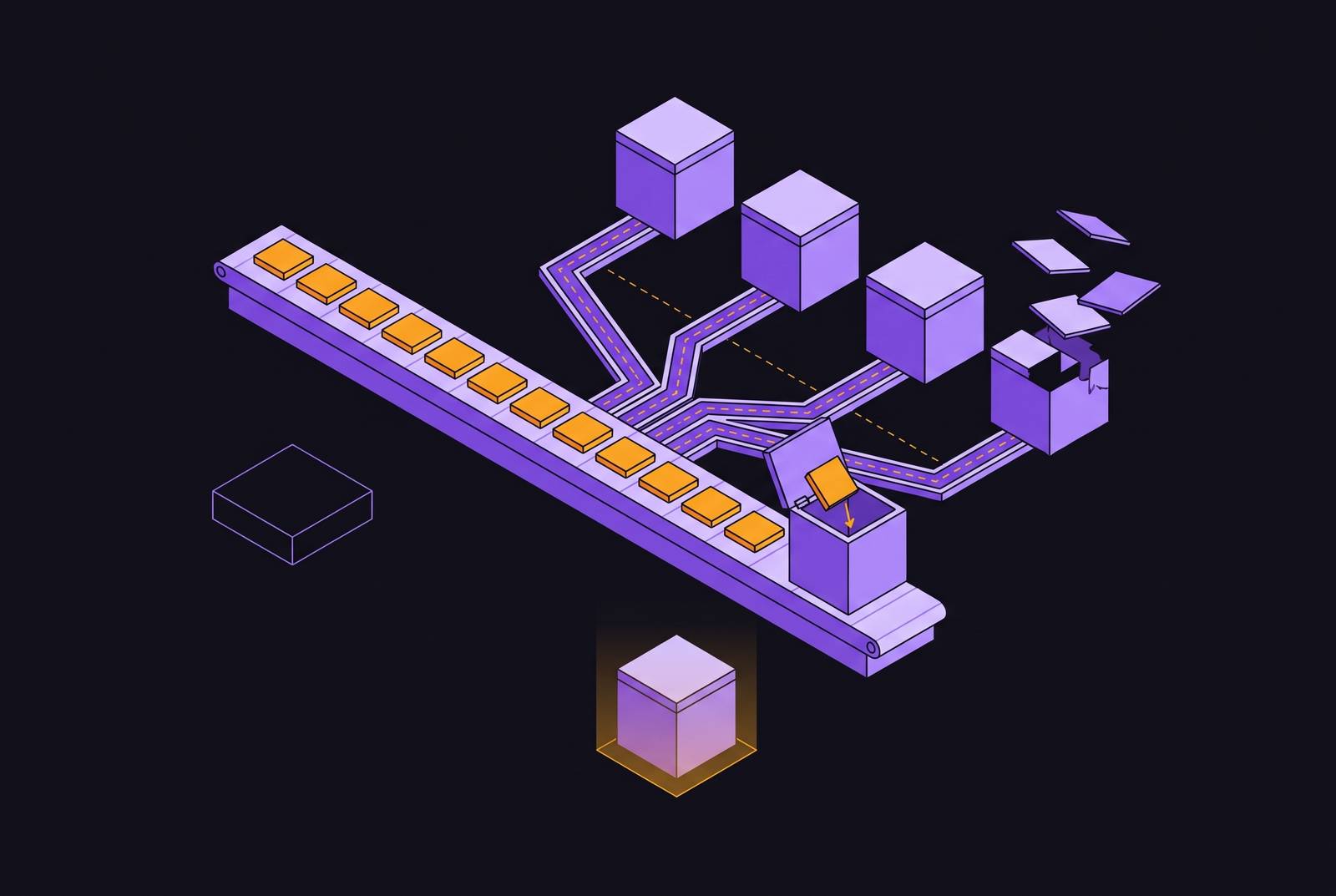
A multi-harness cloud coding agent platform runs different coding agents in parallel without engineers having to manage persistent machines. When every task gets a fresh VM, the queue becomes the coordination layer for context, routing, execution, and attribution. The decisive test is not how many agents it starts, but how much verified work reaches merge without overwhelming reviewers.
Why fresh-VM-per-task queues exist at all
Coding agents do more than propose changes to text. They install packages, spawn processes, write to disk, and make network requests. Those actions alter the environment in which the next command runs. If unrelated tasks reuse that environment, leftover processes, dependencies, or filesystem artifacts can contaminate later work. Parallelism then multiplies uncertainty.
Isolation addresses a different part of the same problem. Standard containers share the host kernel, so a kernel vulnerability or an agent that escapes containment can expose other workloads on the host. Credentials and secrets that survive between tasks add a lateral-movement surface. A fresh VM separates execution while ephemerality prevents task state from becoming an unintended inheritance. For this architecture, both are prerequisites for reliable parallel work.
How the queue becomes the coordination layer when no team owns persistent infrastructure
A persistent machine encodes context through installed dependencies, cached build artifacts, and running daemons. Removing the machine between tasks removes that implicit context. The queue must therefore express which harness and model will run, which credentials apply, which repository snapshot is required, and which concurrency budget governs admission. Coordination moves from the machine into the task envelope.
That shift changes the unit engineers reason about. Instead of configuring a box that gradually acquires state, they configure a unit of work that must arrive with enough information to execute independently. Routing, priority, and attribution belong to that unit because no lasting worker can supply them reliably. The queue is consequently an orchestration surface.
A FIFO queue answers only which task arrived first. It does not answer whether an urgent human request should precede bulk agent work, or whether a task needs a different harness. Treating those choices as explicit policy makes parallel execution governable even when the underlying machines disappear.
What happens during VM boot and workspace preparation before a task starts executing
VM allocation is not the start of useful work. The interval before execution includes booting the machine, cloning the repository, installing dependencies, and loading secrets. Firecracker microVMs, used by Vercel Sandbox and Fly.io Sprites, target sub-second cold starts. But a fast isolation primitive cannot compensate for a workspace that still requires extensive preparation. For real engineering tasks, hydration can dwarf boot time.
Snapshots change that balance by preserving prepared state. Sprites offers filesystem checkpoints, allowing repeated, similar tasks to exchange snapshot overhead for less startup preparation. The important distinction is between deliberately supplied state and accidental residue from an unrelated task. Ephemerality removes the latter without requiring every dependency to be rebuilt from nothing.
A task containing a prepared snapshot reference or pre-baked image tag can start faster than one containing only a repository URL. The scheduler can decide when that task receives a VM, but it cannot erase the preparation implied by its inputs. More parallel machines do not repair an expensive startup path.
How do engineers trigger agents from Slack, issues, or APIs?
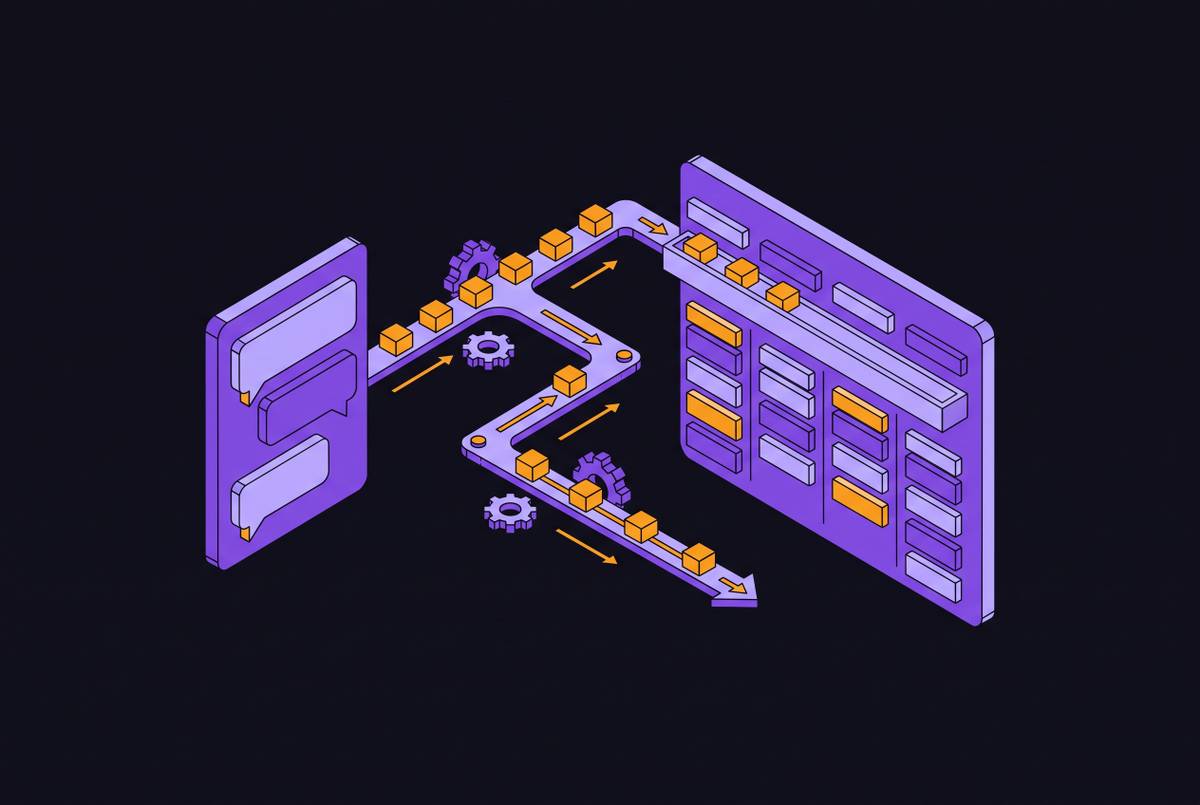
Slack mentions, Linear issues, GitHub labels, deploy hooks, and scheduled jobs provide different ways to submit work. Documented Slack entry patterns route an @-mention to an agent and return results to the thread. Linear’s agent platform connects issues to Cursor, Codex, GitHub Copilot, and other agents. Programmatic assignment through an API allows deploy hooks and scheduled jobs to initiate tasks without a conversational interface.
The entry surface does not define the whole workflow. A Slack message may contain less structured context than an issue, while a GitHub label supplies a different kind of signal again. The queue must enrich those inputs into a consistent task envelope or accept that agents will reconstruct missing context themselves. That reconstruction consumes tokens before substantive work begins.
Teams weighing Slack-to-PR delegation through Claude Code or Codex need to check more than whether a bot accepts a mention. Harness selection, repository context, credentials, and the return surface all belong to the handoff. Normalizing these inputs also makes tasks comparable across channels. Without that shared form, each entry point becomes its own queue, and teams struggle to compare what the queues cost and what work they produce.
Scheduling decisions inside the queue — priority, concurrency limits, and model routing
Concurrency is constrained by more than available machines. Provider plans set different limits on how many sessions can run at once, so scheduling policy depends in part on the plan a team chooses. Modal’s sandbox overview describes automatic CPU and memory bursting to absorb spikes. That helps meet the demand for resources, while priority still sets which work should go first. Without clear rules, low-priority bulk tasks can hold up urgent requests.
Cursor’s Router offers Intelligence, Balance, and Cost modes, with administrative controls for team defaults and permitted optimization modes. An Enterprise plan is needed to block specific underlying models.
OpenCode offers a different capability through model independence. The same harness can connect to models selected by the user or configuration, but that does not constitute automatic task-based scheduling. Terminal-Bench 4.0 results show that configurations with the same benchmark performance can have very different costs, so task-based routing can save money. Well-understood work need not use the same configuration as a difficult task merely because that configuration became the default.
What saturation looks like when the queue runs at scale — and the bottleneck that actually bites
The first binding constraint at scale can sit downstream of execution. LinearB’s 2026 Software Engineering Benchmarks and related research describe agent-generated PRs as substantially larger than human PRs and slower for reviewers to pick up. The research also shows that most AI-generated PRs do not merge within the measured window. Opening a PR is therefore a weak proxy for delivered work.
The saturation pattern is recognizable in review metrics. Median time to first review and median code review time rise while VMs continue completing tasks. The execution queue appears healthy, but unfinished work accumulates at the human gate. Increasing VM concurrency under those conditions feeds the backlog.
Downstream services create another source of contention. Agents that install packages, run services, and make network requests can exhaust API allowances, test database capacity, and CI runners faster than an individual developer. Queue capacity must therefore be understood across the whole system. The design response is to govern both how many agent PRs enter review simultaneously and how many VMs can start. The success metric is merged work, with review capacity setting the sustainable pace.
How tasks exit the queue — outputs, verification, and the last-mile problem agents cannot solve inside their sandbox
A standard agent run can finish with a pull request, unit-test results, and a recording or log of its actions. Those outputs provide evidence of execution within the sandbox. They do not, by themselves, establish that the change works in a deployed environment.
That distinction becomes costly when many tasks finish at once. If each PR comes with only unit-test evidence, reviewers must do the missing deployment verification. The queue has completed its stated contract while leaving substantial work outside it.
The recommended response is to widen that contract. An environment that permits deployment, end-to-end tests against services, and a usable preview URL can provide stronger evidence before the PR opens. These capabilities shift verification earlier and reduce the manual burden at review. They change what the reviewer must establish. The queue should take that difference into account when it marks work as complete, since successful sandbox runs can differ in how ready they are to merge.
Why the environment the agent runs in shapes output quality as much as the model does
An agent without system dependencies spends tokens installing them, while an agent without staging services, databases, or APIs writes code it cannot fully validate. Browser or GUI work requires the corresponding tooling. Tasks spanning steps or sessions may also need persistent files, even when individual execution VMs remain disposable.
Deployment choices determine which resources the agent can reach. As of August 2026, Anthropic lets Team and Enterprise organizations route Claude Code cloud sessions to self-hosted environments on their own servers. Cursor offers self-hosted workers that keep tool execution inside the customer’s network while orchestration and inference remain in its cloud. However, tool outputs flow back for inference and may contain code.
Bring-your-own-cloud arrangements offer another ownership boundary. Northflank acts as a control plane for coding agents and sandboxes running in the customer’s VPC, so platform management need not imply a vendor-owned cloud account. Audit shell access, background processes, accessible ports, persistent files, and network reach before tuning model routing. Model selection remains consequential, but environment gaps can prevent any selected model from closing the verification loop.
Attribution and observability across the full queue — knowing what actually shipped and why
To improve routing, a queue needs to know which runs led to merged work. Per-run attribution must distinguish the harness, model, credential, and trigger source. As agent-created work becomes more common in issue trackers, authorship becomes harder to recover from downstream totals alone. Explicit tags preserve the connection between an input and its outcome.
The useful metrics extend beyond PR creation. A 30-day merge rate split by harness and model shows which configurations produce work that ships. Median time to first review, separated by agent authorship, exposes pressure on the review pipeline. Reviewer-hours per merged PR makes the human cost budgetable, while the rate of merges with zero review approvals reveals risk that throughput totals can conceal.
Cost attribution needs the same level of detail. Knowing which model ran is insufficient without duration and the credential used for the task. Aggregate cloud billing establishes expenditure. Gitmore labels agent-written pull requests and commits, illustrating the role of explicit authorship tracking. Full queue observability must link that authorship to what execution costs, how much review the work needs, and whether it merges, tracking it beyond the generated artifact.
How to design a queue that scales — the practical decisions teams get wrong first
Repository snapshots, pre-baked images, dependency manifests, and secret scope let a VM begin with prepared context, reducing the setup work assigned to the agent. Cursor’s Builds data associates faster environment boot with substantially faster time to first token. Teams should cut the setup each task needs before relying on more VMs as the main way to speed up work.
Routing should then follow task type. Linting, documentation generation, and test scaffolding are candidates for lower-cost configurations, while harder tasks can receive more capable ones where benchmark differences predict better output. Harness independence preserves the ability to change that allocation without restructuring the queue.
The remaining decisions concern what happens after execution. Wider exit conditions provide deployment evidence, while review throughput governors align incoming PRs with available reviewer-hours per sprint. Attribution belongs in the design before the first PR opens, because reconstructing it later is harder than recording it at entry. Together, these choices make the queue the operational model for delegation, measurement, and improvement, rather than an infrastructure service judged by how quickly it can create machines.